On this page +
Social classes
Social classes are County of Fortune’s progression spine. Each class brings new needs, new buildings and new workers. Growing a settlement from a peasant hamlet to a patrician city is the clearest measure of whether your county is actually working.
The four classes
| Class | Settlement level | Core needs | What it unlocks |
|---|---|---|---|
| Peasants | Hamlet (1) | Basic food, basic equipment | Farms, extraction, carpenter’s guild, wooden chests, wool tunics |
| Commoners | Village (2) | Food variety, better equipment | Small market, raft port, tavern, mill, bakery, cheesery, masonry buildings |
| Artisans | Town (3) | Composite food, advanced equipment | Foundry, glassworks, steelworks, precision components, luxury workshops |
| Patricians | City (4) | Luxury goods, fine food and clothing | High-tier luxury production, ports and the largest population |
The demo reaches level 2 and Commoners. Early Access raises the cap to level 4 and adds Artisans and Patricians.
Settlement levels
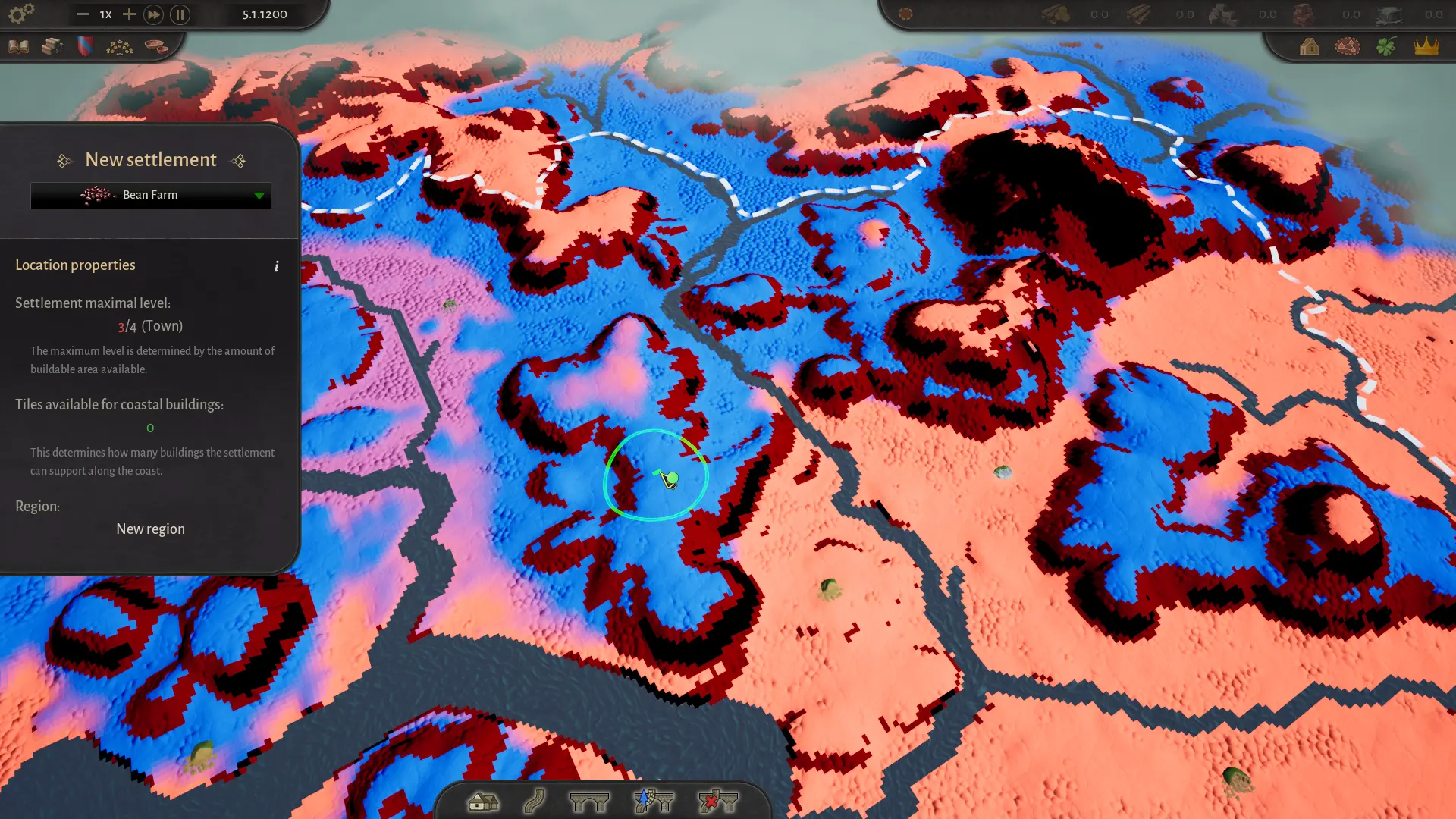
A settlement’s level is shown in its panel: Hamlet, Village, Town or City. The maximum level is determined by the amount of buildable area available, not just by supply. A cramped site may cap below level four even if its needs are met.
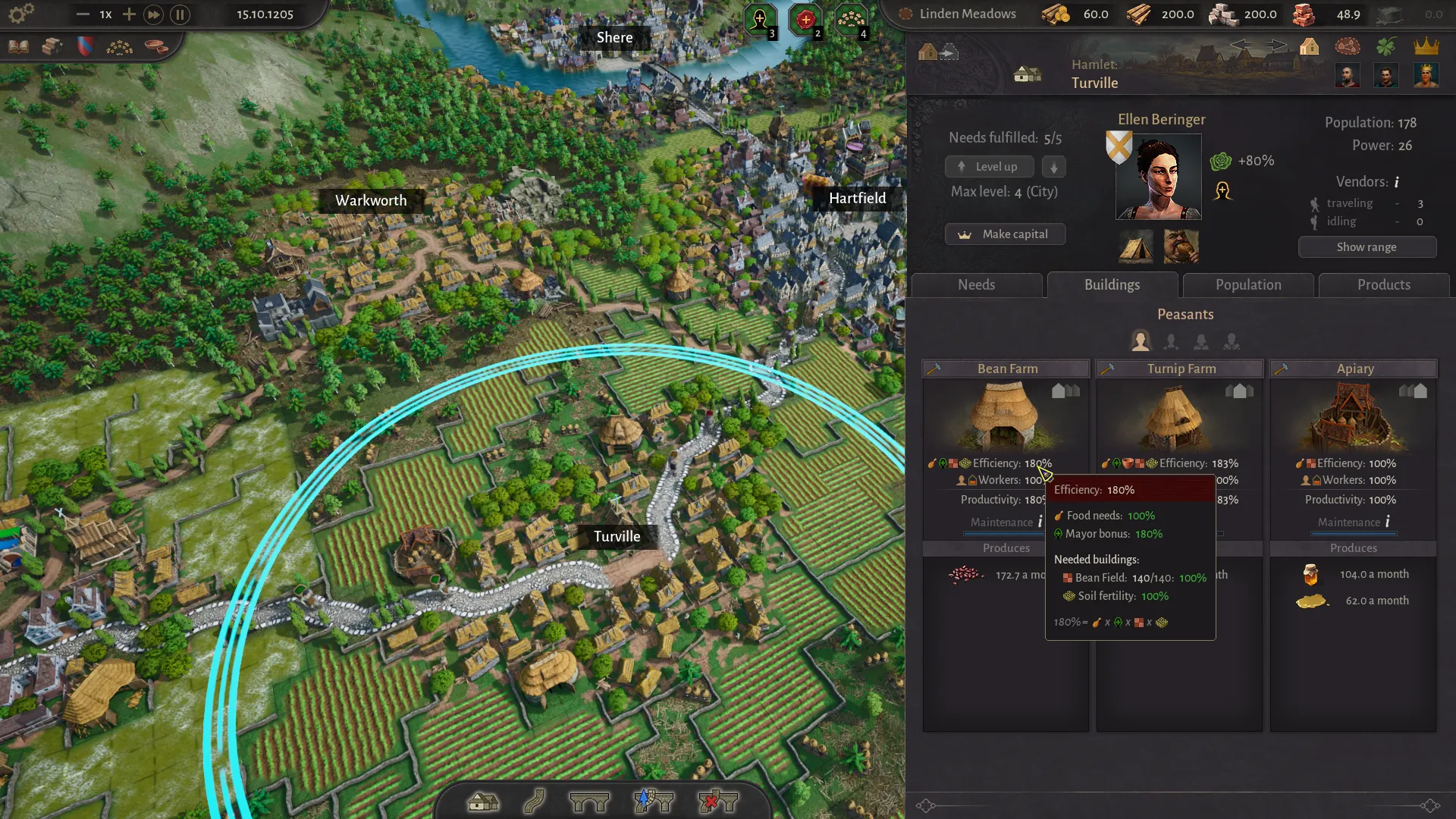
Leveling up is not automatic. Once the needs are satisfied, you click the Level up button. You can also level a settlement down to free supply for another settlement, which is useful when a region is overextended.
Food and equipment needs
The two core need categories are Food and Equipment. Early settlements need simple food and basic equipment; higher classes require more variety, processed food and higher-tier goods.
- Food variety: multiple foods improve satisfaction; processed foods such as bread and cheese support higher classes.
- Equipment: wooden chests and wool tunics at the Peasant tier; leather and finer clothing later.
- Composite food: Artisan dishes combine several chains, such as beef with chestnut oil, bread, flour and grain.
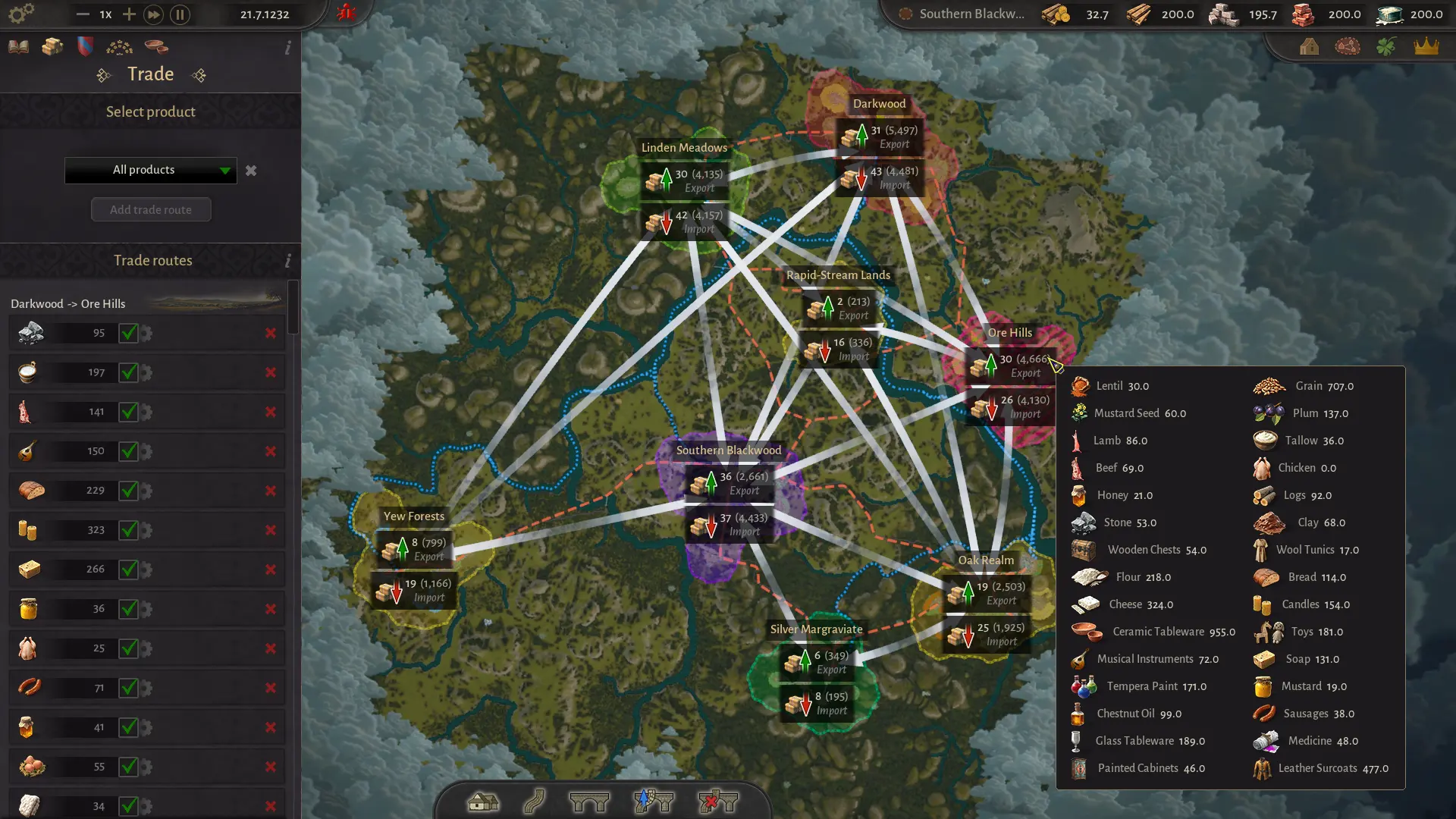
- Luxury goods: Patricians are expected to want candles, ceramic tableware, musical instruments, medicine and painted cabinets.
The Needs tab is the source of truth. It shows each class’s required goods and whether they are being consumed. If an icon is red, the settlement will not level up.
Do not click Level up the moment the button becomes available. Check that the new class’s needs can be supplied for several minutes. A settlement that levels into a shortage will lose efficiency and may drop back down.
How to level up
- Open the settlement panel and go to the Needs tab.
- Confirm every Food and Equipment need is supplied, not just one category.
- Check that the required goods are reaching the settlement by road or river.
- Click Level up next to the mayor portrait.
- Recheck the new class’s needs and add production before leveling another settlement.
You can also level down. If two settlements are competing for the same scarce goods, concentrate supply on the one that unlocks the most value, then rotate. The settlements guide covers the trade-offs.
Building slots and workers
Each class has its own building slots. Supplying equipment unlocks the next slot in that class. At level two and above, more equipment also increases the maximum number of workers in buildings, so equipment is both a gate and a throughput upgrade.
This creates a useful feedback loop: better equipment → more slots and workers → more production → more equipment. The loop stalls if the equipment chain is weak, which is why wooden chests or wool tunics are such a high priority in the opening.
Progression strategy
- Stabilise before you level. A new class adds needs; make sure the region can meet them before upgrading multiple settlements.
- Specialise by class. A farming town may stay at level 2 while a workshop town pushes to level 4. Not every settlement needs to be a city.
- Use level-down as a tool. Rotating levels is better than letting every settlement starve.
- Plan the composite chains. Artisan food requires multiple raw and processed goods; build the inputs before the upgrade.
- Save the luxury chains for a strong economy. Patrician goods are deep, expensive and trade-dependent.
For the buildings that unlock at each tier, see the buildings reference. For the goods, use the resources guide. For the production planning, read the production chains guide.
Quick answers
County of Fortune social class questions
What are the social classes in County of Fortune?
Peasants, Commoners, Artisans and Patricians. Peasants are available from the start; Commoners unlock at settlement level 2; Artisans and Patricians arrive at levels 3 and 4 in Early Access. The demo stops at Commoner.
How do I unlock Commoners?
Level a settlement to level 2 by fulfilling all of its food and equipment needs, then click Level up. The Commoner building tab and needs appear after the upgrade.
Why can’t I level up even though food is supplied?
Check both food and equipment. A settlement needs all of its consumption needs met, not just one category. A missing equipment good or a red icon in the Needs tab will block the upgrade.
What do Artisans need?
Artisans require higher-value food and equipment, including composite dishes such as beef on chestnut oil and advanced workshop goods. The exact recipes vary by settlement and build; check the Needs tab after reaching level 3.
Do Patricians need luxury goods?
Yes. Patricians are the highest class and are expected to demand luxury goods such as painted cabinets, glass tableware, medicine, musical instruments and fine clothing. The demo does not reach this tier, so treat the list as indicative rather than a complete recipe.