On this page +
Assembly & privileges
The Assembly is where County of Fortune’s political layer becomes mechanical. Noble houses propose regional privileges, stewards vote, and the winning proposal changes the economy of a region. Understanding the flow is the difference between politics as noise and politics as a tool.
What is the Assembly?
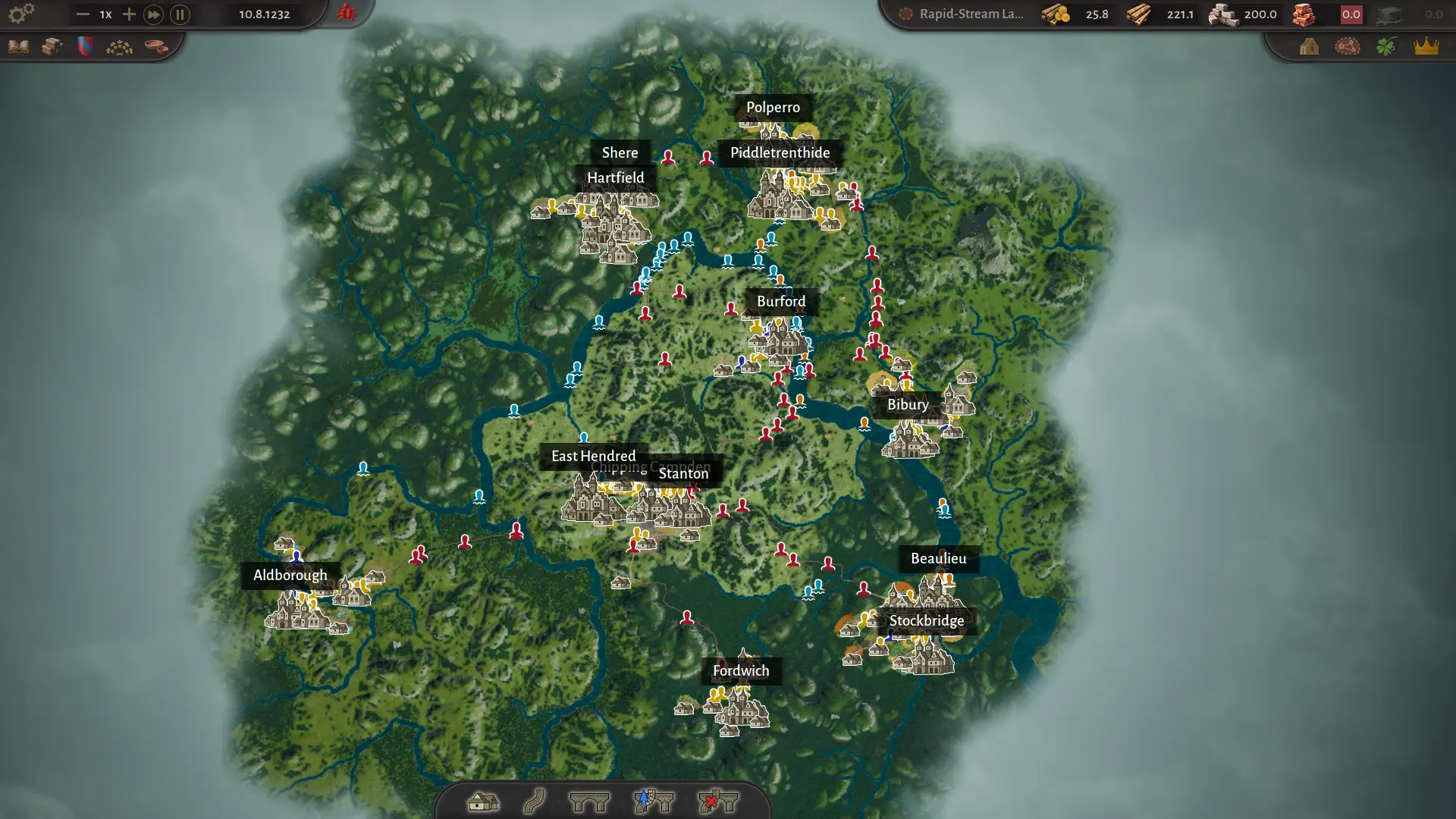
The Assembly is a regional political body. Stewards from the county’s regions gather, each noble house puts forward a privilege proposal and the assembled stewards vote. The winning proposal is then granted to one of the regions whose steward supported it.
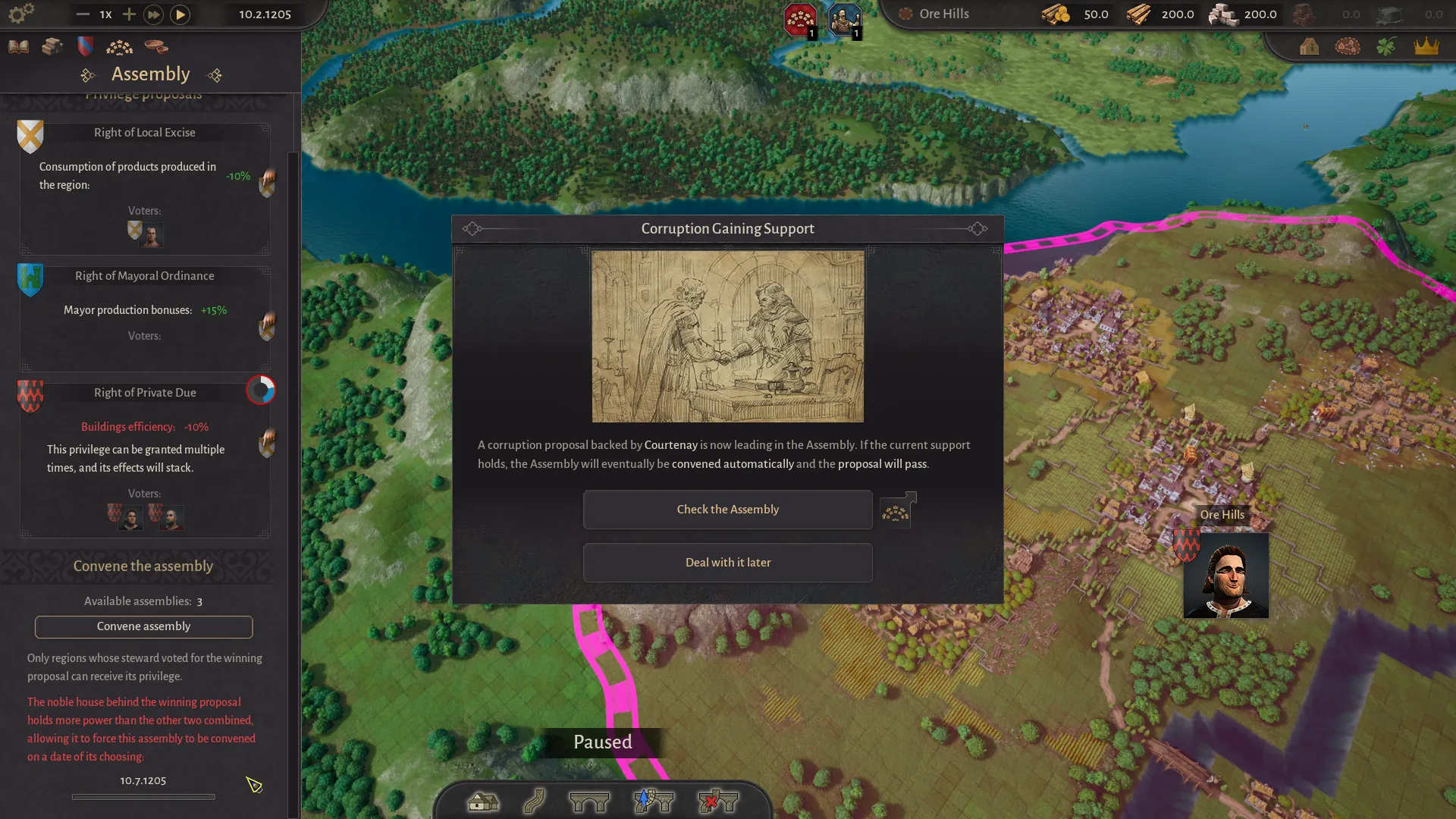
The Assembly panel shows available assemblies, the current proposals, their effects and the voters backing them. You can convene an assembly when one is available, or wait for a forced assembly if the political balance allows it.
Privilege proposals
Each proposal is a regional modifier. The demo shows both positive and negative examples:
| Privilege | Effect | Notes |
|---|---|---|
| Right of Local Excise | Consumption of products produced in the region −10% | Good for a region that consumes its own output |
| Right of Mayoral Ordinance | Mayor production bonuses +15% | Strong in a region with well-matched mayors |
| Right of Capital Priority | Capital buildings efficiency +25% | Best in a developed capital with high-value buildings |
| Right of Private Due | Buildings efficiency −10% | Corruption; can be granted multiple times and stacks |
These are examples, not a complete list. The best privilege depends on the region’s role: a capital wants building efficiency, a self-sufficient region benefits from reduced consumption, and a mayor-heavy region gets more from the mayoral bonus.
Voting and recipients
- Houses propose. Each house backs a privilege, often aligned with its interests.
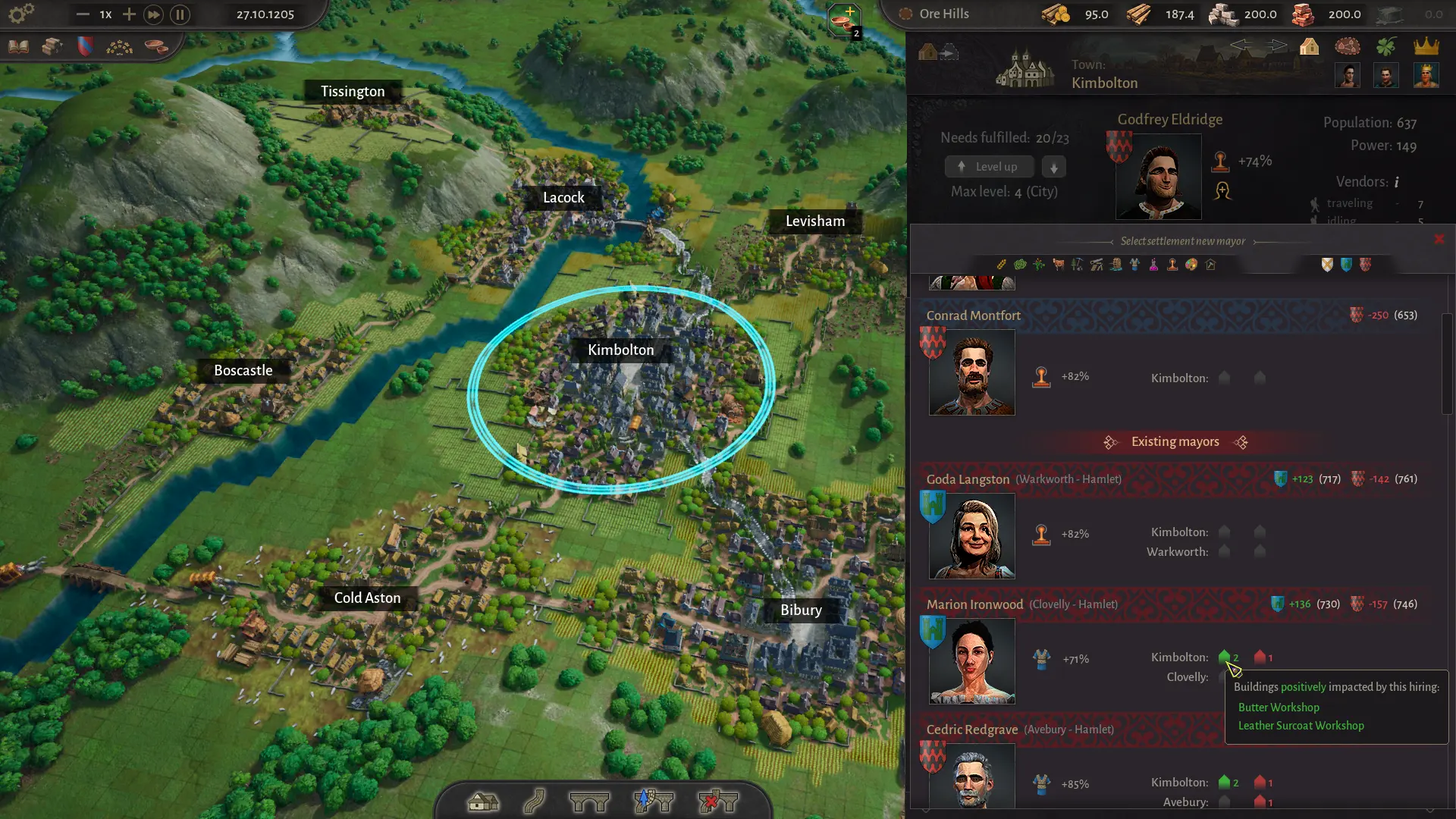
- Stewards vote. Regional stewards cast support based on house influence, relations and the proposal.
- A winner emerges. The proposal with the most support passes.
- An eligible region receives it. Only regions whose steward voted for the winner can receive the privilege; the player chooses which one.
This is why steward elections matter. A region whose steward opposes the winning house may be ineligible for the very privilege it needs. Before an Assembly, check which way each steward is likely to vote and whether your target region will be eligible.
Decide which region should receive the privilege first, then work out which proposal and steward vote will make it eligible. Do not vote for a good privilege that cannot be granted to the region you care about.
Corruption and forced assemblies
Not every proposal is benign. A corruption proposal can gain support and, if it holds, trigger an automatic Assembly where the proposal passes. The demo surfaces this as a warning: a corruption proposal backed by a house is leading the Assembly, and you can check the Assembly or deal with it later.
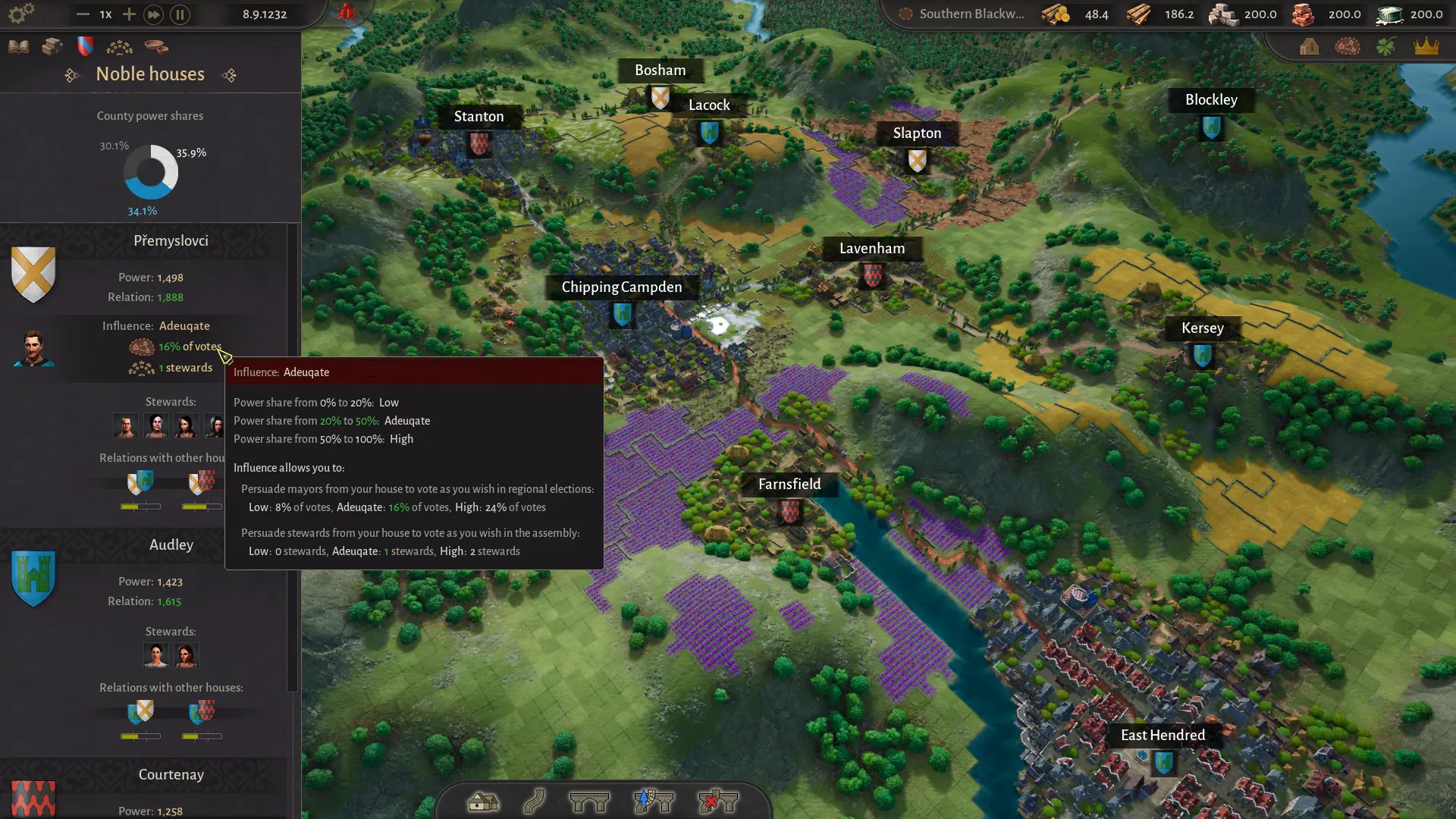
A dominant house can also force an Assembly if it holds more power than the other two houses combined. In that case, the timing is chosen by the house, not by you. The counter is to prevent any single house from reaching that threshold, or to ensure its interests align with yours.
| Signal | What it means | Response |
|---|---|---|
| A house’s power share approaches 50% | It is close to being able to dominate the other two | Balance appointments or strengthen rival houses |
| A corruption proposal leads | It may pass automatically | Check the Assembly, build support for an alternative or accept the cost |
| Your target region’s steward opposes the winner | The region cannot receive the privilege | Change the steward or choose a different privilege |
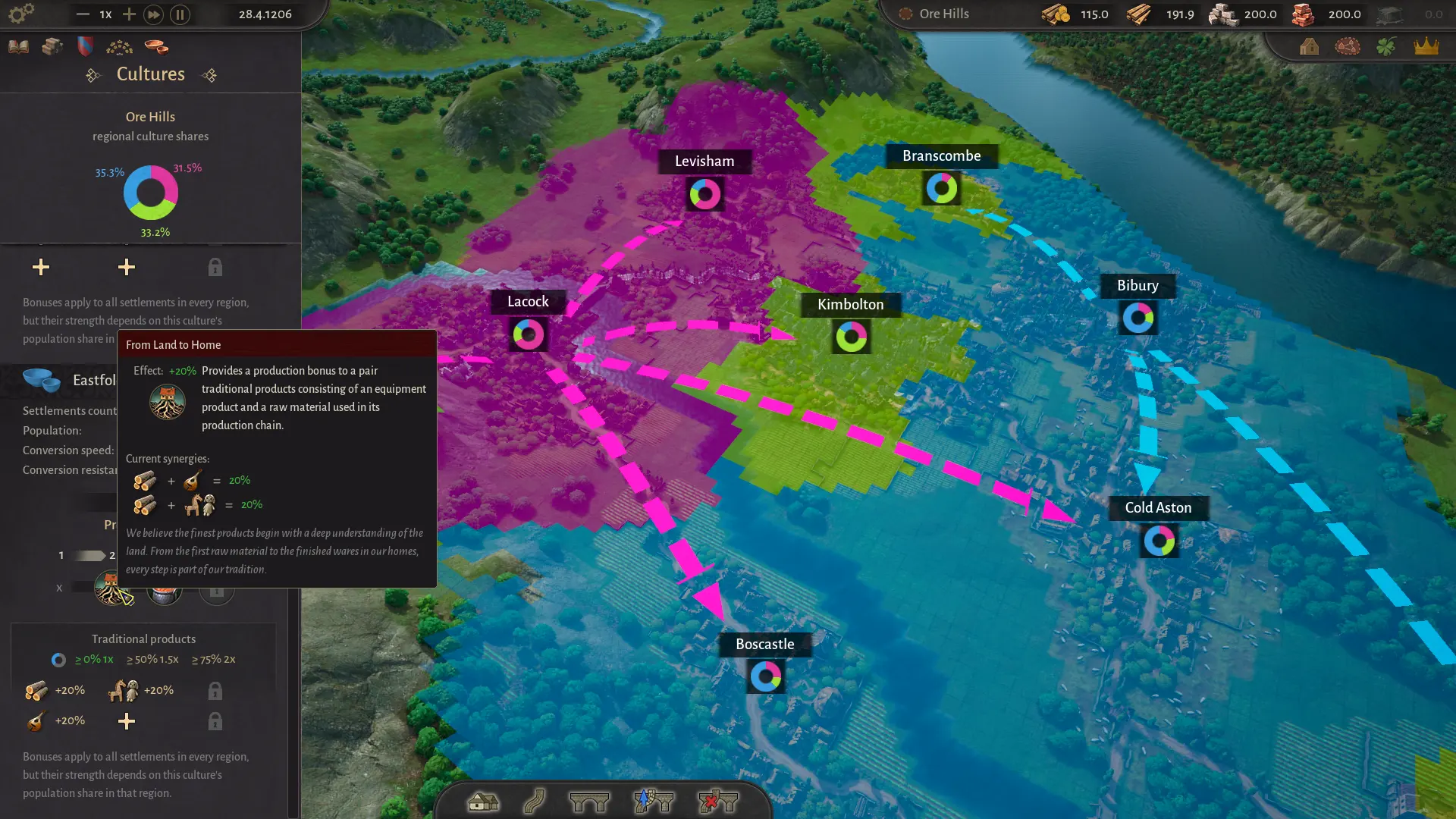
| A negative privilege already passed | Its effect may stack | Offset it with efficiency, mayor or culture bonuses |
Assembly strategy
- Keep one house from dominating. A balanced county is easier to steer than one where a single house can force votes.
- Use positive privileges on your strongest region. A +25% capital efficiency bonus is worth more where the buildings are already productive.
- Do not ignore corruption. A stacked −10% building efficiency penalty can quietly erase a mayor bonus across the county.
- Coordinate with elections. The steward you want may be the one who makes your target region eligible for the next privilege.
- Save before a forced Assembly. If the outcome is uncertain, a save lets you compare the alternatives without committing the county.
Known privileges and their best use
The demo’s privilege set points to three economic levers: consumption, mayor bonuses and building efficiency. A simple rule is:
- High-consumption region: Right of Local Excise.
- Region with strong mayors: Right of Mayoral Ordinance.
- Developed capital: Right of Capital Priority.
- Corruption: avoid or offset, especially if it can stack.
For the houses behind the votes, read the noble houses guide. For the regional structure, see regions and stewards.
Quick answers
County of Fortune Assembly questions
How often can the Assembly meet?
The demo shows a number of available assemblies and a “Convene assembly” button. The exact recharge rate depends on the current build and political situation; a dominant house can also force an assembly on a date of its choosing.
Who receives the winning privilege?
Only regions whose steward voted for the winning proposal can receive its privilege. The player then chooses which eligible region gets it. This makes steward elections and regional politics directly relevant to your economy.
What is a corruption proposal?
A corruption proposal is a privilege backed by a house that can pass automatically if support holds. The demo warns that a corruption proposal is leading the Assembly and offers to check the Assembly or deal with it later. Passing it can harm the county.
Can privileges stack?
Some can. The Right of Private Due explicitly says it can be granted multiple times and its effects stack, though it reduces building efficiency. Positive privileges may also combine with mayor, culture and capital bonuses.
Why did an Assembly pass without me?
If a noble house holds more power than the other two combined, it can force the Assembly to convene on a date of its choosing. In that situation, the proposal may pass before you can stop it. Monitor power shares to avoid this.