On this page +
Buildings reference
Buildings are how a settlement turns terrain into an economy. This reference groups the buildings observed in the County of Fortune demo by role, with their inputs, outputs and practical notes. Early Access adds more than 40 production buildings, so treat this as a working catalogue rather than a final list.
Building roles
01
Food & agriculture
Farms, pastures, orchards, apiaries and fisheries. They produce the raw food that keeps settlements alive and supplies processed food chains.
02
Extraction & construction
Logging camps, quarries, clay pits and the guilds that turn wood and stone into construction points. These buildings decide how fast you can build.
03
Processing & workshops
Mills, bakeries, potteries, foundries and luxury workshops. They turn raw goods into higher-value products and unlock social-class progression.
04
Trade & services
Markets, raft ports, harbors and taverns. They move goods, connect regions and shape culture. Without them, a productive settlement can still stagnate.
Building list
The table is sorted by role and tier. “Input” and “Output” describe the building’s main production role; some buildings have multiple recipes or service effects that are better explained in their tooltip.
| Building | Role | Tier | Input → Output | Notes |
|---|---|---|---|---|
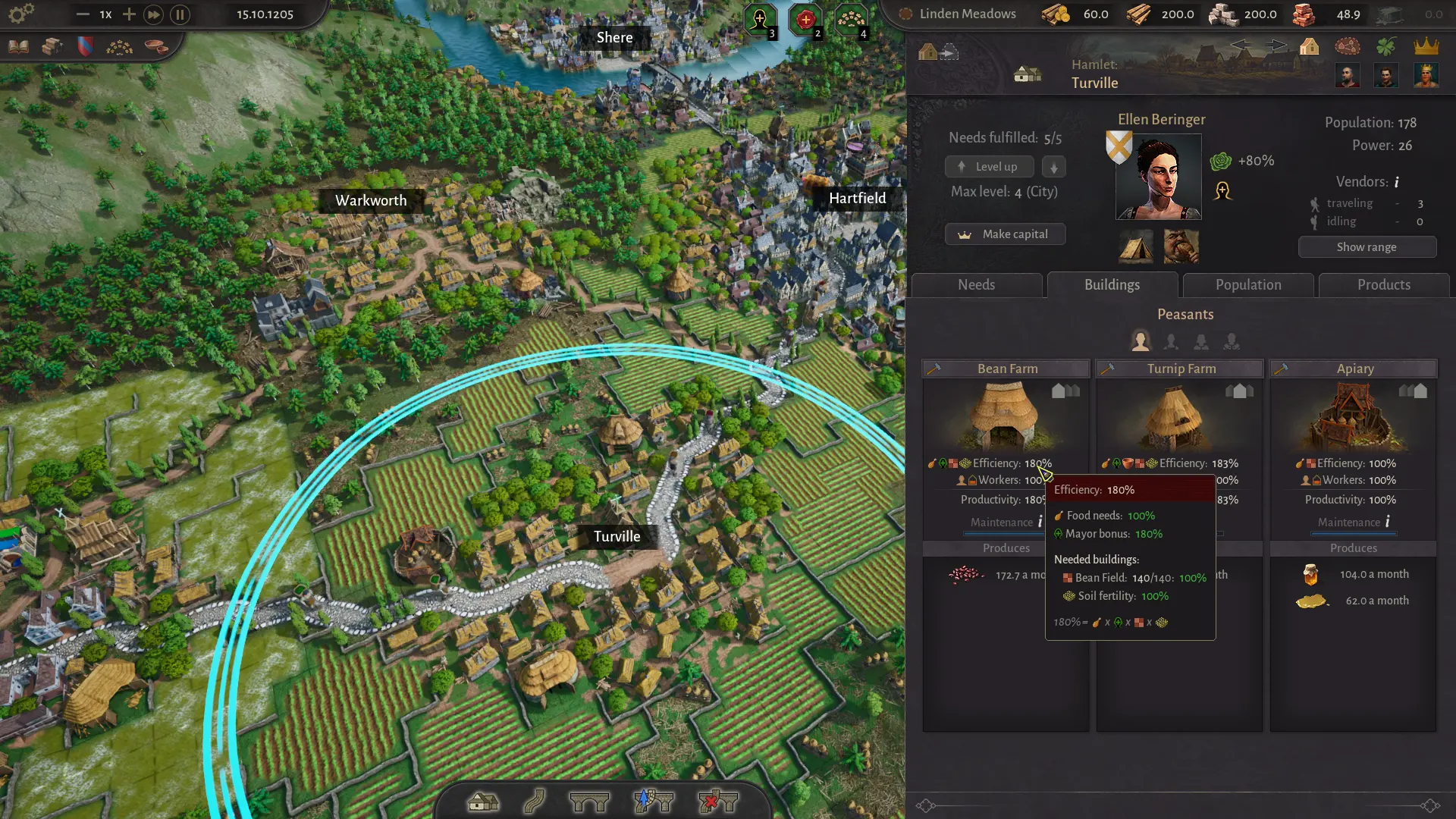
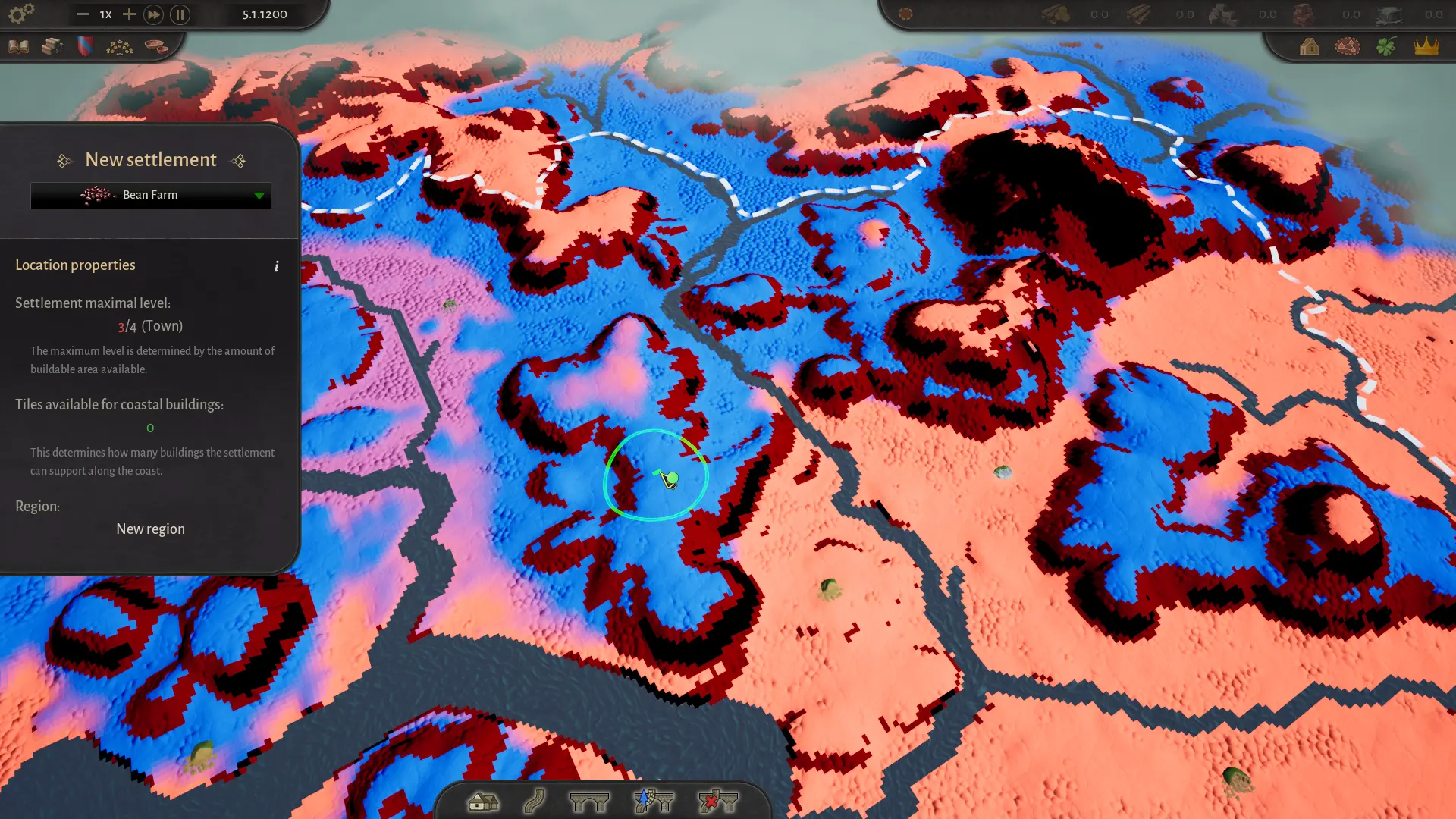
| Bean Farm | Food | Peasant | — → Beans | Reliable early food; soil and climate matter. |
| Turnip Farm | Food | Peasant | — → Turnips | Early vegetable food; pairs with cabbages. |
| Cabbage Farm | Food | Peasant | — → Cabbage | Common early food in fertile regions. |
| Wheat Farm | Food | Peasant | — → Grain | Feeds the flour and bread chain. |
| Rye Farm | Food | Peasant | — → Grain | Alternative grain farm for bread and flour. |
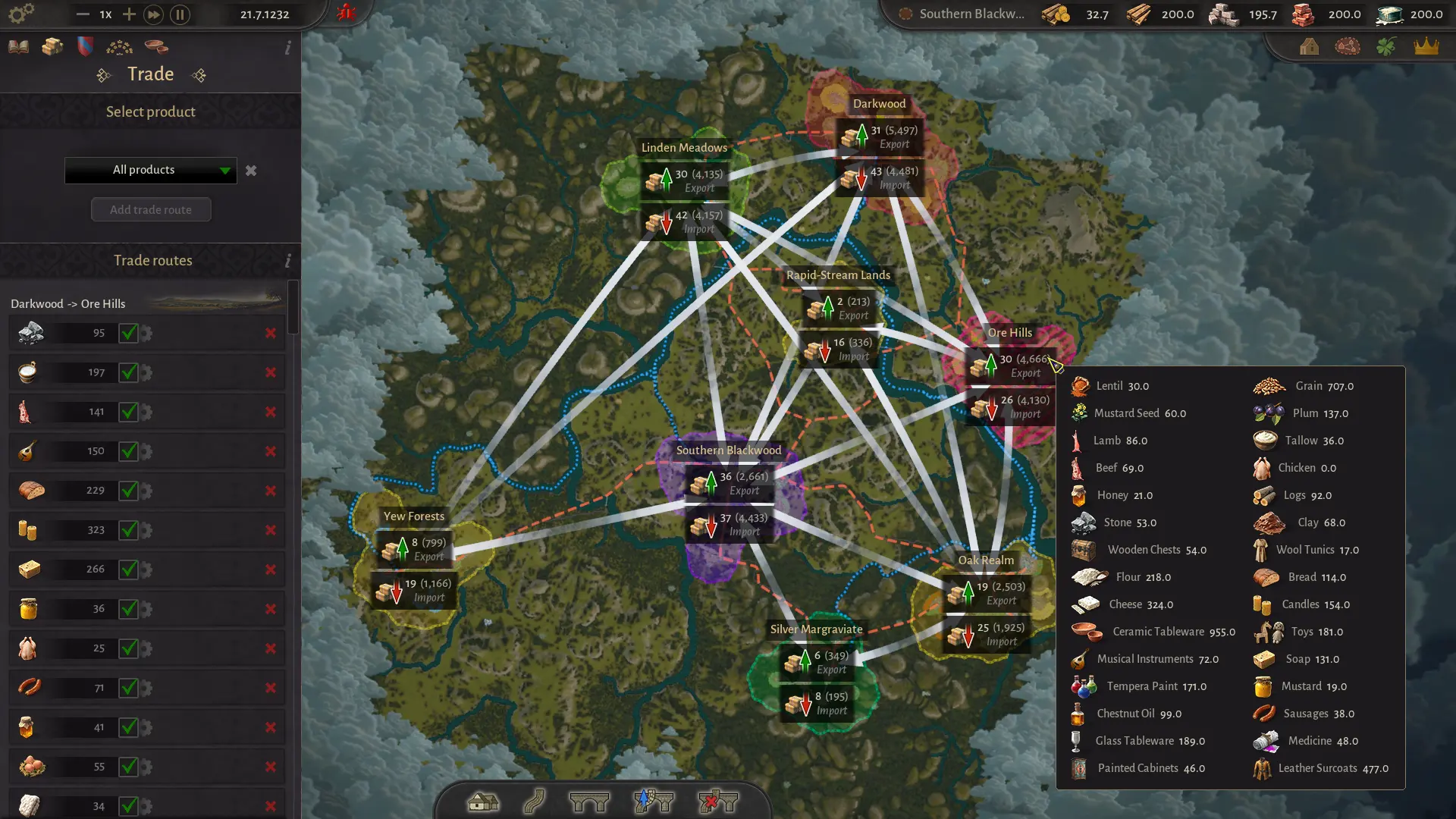
| Lentil Farm | Food | Peasant | — → Lentils | Food variety; seen in the demo trade list. |
| Buckwheat Farm | Food | Peasant | — → Buckwheat | Another food crop; placement depends on soil. |
| Chestnut Orchard | Food | Peasant | — → Chestnuts | Feeds chestnut oil and Artisan food. |
| Cattle Farm | Food | Peasant | — → Beef | High-value food; part of composite dishes. |
| Sheep Farm | Food / fibre | Peasant | — → Wool | Wool feeds the wool tunic chain. |
| Apiary | Food | Peasant | — → Honey | Food and trade good; low infrastructure. |
| Fishery | Food | Peasant | — → Fish | Coastal or river food source. |
| Logging Camp | Raw material | Peasant | — → Logs | Feeds carpentry, chests and construction. |
| Stone Quarry | Raw material | Peasant | — → Stone | Required for masonry and stone roads. |
| Clay Pit | Raw material | Peasant | — → Clay | Feeds pottery and brickmaking. |
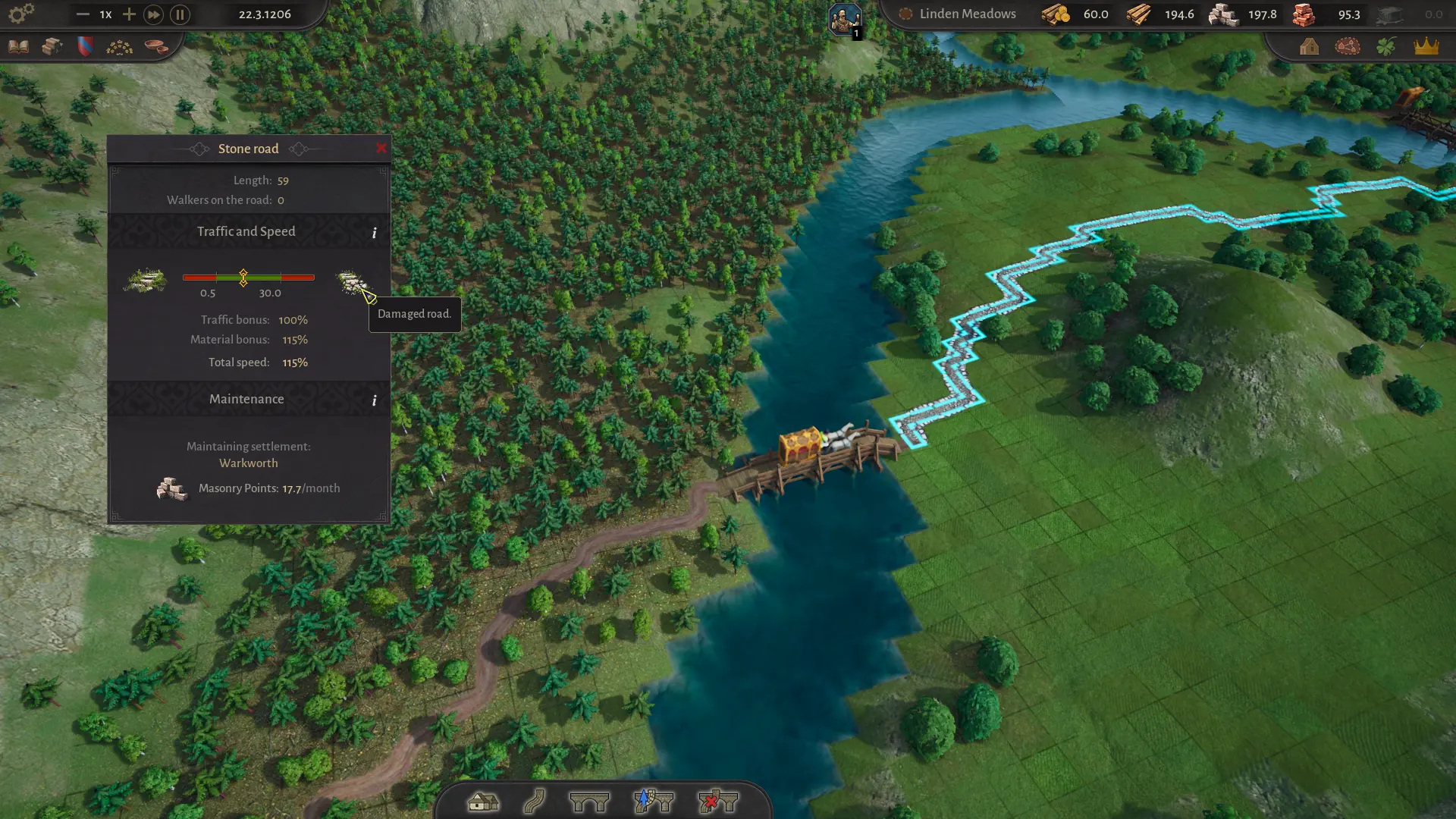
| Carpenter’s Guild | Construction | Infrastructure | Logs → Carpentry points | Maintains buildings and roads; keep it staffed. |
| Mason’s Guild | Construction | Infrastructure | Stone → Masonry points | Needed for stone buildings and road upgrades. |
| Wooden Chest Workshop | Equipment | Peasant | Logs → Wooden Chests | Unlocks building slots; early equipment good. |
| Wool Tunic Workshop | Equipment | Peasant | Wool → Wool Tunics | Alternative equipment chain; useful for later needs. |
| Water Mill | Processing | Commoner | Grain → Flour | Required for bread production. |
| Bakery | Food processing | Commoner | Flour → Bread | Higher-value food for Commoners and above. |
| Cheesery | Food processing | Commoner | Dairy → Cheese | Food variety; confirm the dairy input in your build. |
| Butter Workshop | Food processing | Commoner | Dairy → Butter | Food variety; mayor bonuses can target it. |
| Venison Workshop | Food processing | Commoner | Venison → Prepared venison | Hunting-chain food; exact recipe varies by build. |
| Brickmaker | Construction | Commoner | Clay → Bricks | Construction good for higher-tier buildings. |
| Pottery | Craft | Commoner | Clay → Pottery | Feeds ceramic tableware and trade. |
| Small Market | Trade | Commoner | Goods → Regional distribution | Enables land trade and raft-port receiving. |
| Raft Port | Trade | Commoner | Goods → Downstream river trade | Must be on a navigable river, not a fork. |
| Tavern | Service | Commoner | Beer → Worker efficiency + culture conversion | Can change the dominant culture over time. |
| Chestnut Oil Press | Processing | Artisan | Chestnuts → Chestnut Oil | Used in Artisan composite food. |
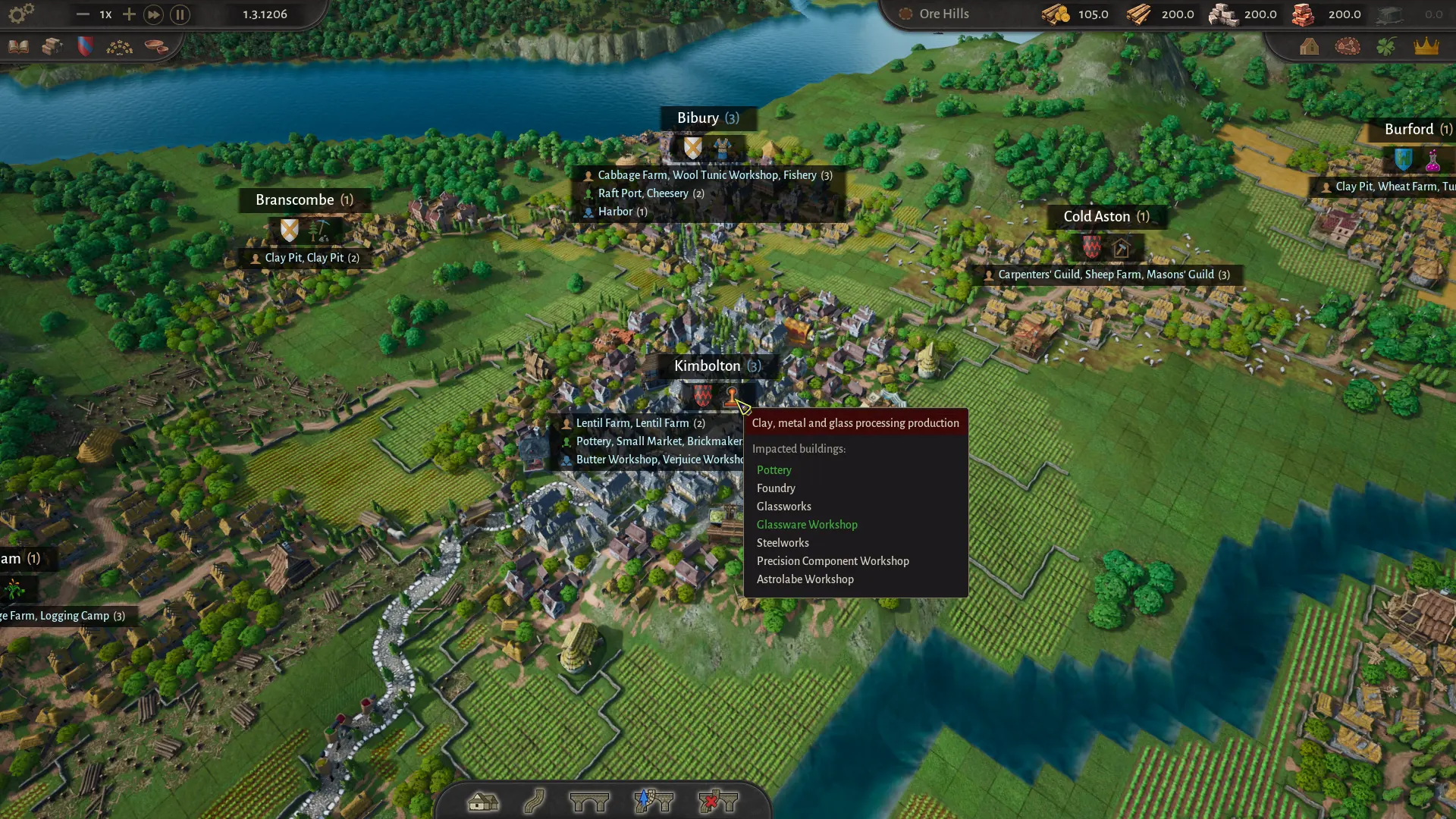
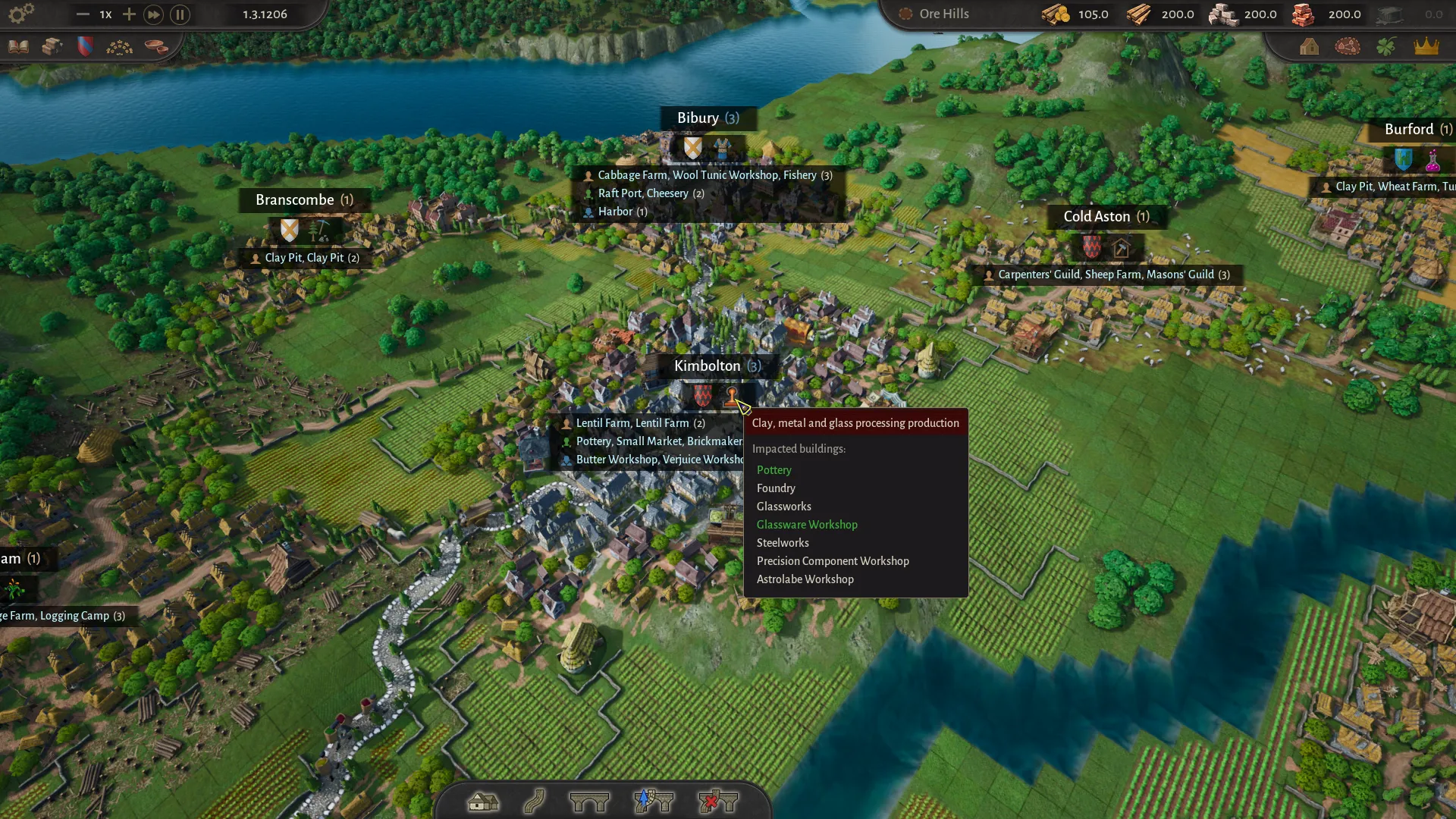
| Foundry | Metal / glass | Artisan | Ore / metal → Metal goods | Part of the clay, metal and glass production group. |
| Glassworks | Metal / glass | Artisan | Sand → Glassware | Feeds glass tableware and precision goods. |
| Glassware Workshop | Craft | Artisan | Glassware → Glass Tableware | High-value luxury good. |
| Steelworks | Metal | Artisan | Iron → Steel | Supports precision components and tools. |
| Precision Component Workshop | Craft | Artisan | Steel / glass → Precision Components | High-tier input for astrolabes and luxury goods. |
| Astrolabe Workshop | Luxury | Artisan | Precision Components → Astrolabes | Example of a deep luxury chain. |
| Market | Trade | Trade | Goods → Regional distribution | Larger trade building; check capacity in-game. |
| Harbor | Trade | Trade | Goods → Water trade | Seen in the demo; supports larger river or coastal trade. |
| Port | Trade | Trade | Goods → Bidirectional water trade | Early Access adds ports and sailboats. |
Early Access adds new buildings and may move some existing ones between social classes. If a building is not where you expect, check the current in-game build menu rather than relying on a video from the June demo.
Tiers and unlock rules
Buildings are gated by social class and, for trade and infrastructure, by settlement level or region rules. The general pattern is:
| Class | Settlement level | Typical buildings |
|---|---|---|
| Peasants | Hamlet (1) | Basic farms, logging, quarry, clay pit, pastures, carpenter’s guild, wooden chest and wool tunic workshops |
| Commoners | Village (2) | Mill, bakery, cheesery, small market, raft port, tavern, masonry buildings |
| Artisans | Town (3) | Foundry, glassworks, steelworks, precision components, luxury workshops |
| Patricians | City (4) | High-tier luxury goods, ports and the most advanced production chains |
Building slots are per class. Supplying equipment unlocks the next slot in that class; at level two and above, more equipment also increases the maximum worker count. The social classes guide explains the full progression.
Placement principles
- Put extraction near the deposit. A quarry or clay pit belongs on the resource, not in the capital for convenience.
- Cluster inputs and processors. A mill next to grain farms and a bakery saves road capacity and travel time.
- Keep guilds central. Carpenter’s and mason’s guilds serve the whole region; place them where workers and inputs are reliable.
- Put markets and ports on the network. A market in a backwater with no road is a warehouse, not a trade hub.
- Do not build a port at a river fork. Choose a clear channel for raft ports.
- Leave room for the next tier. A settlement packed with peasant buildings may have no space for the workshops it needs later.
Key chains to know
| Chain | Buildings | Why it matters |
|---|---|---|
| Bread | Wheat/Rye Farm → Water Mill → Bakery | Higher-value food for Commoners and above |
| Wool clothing | Sheep Farm → Wool Tunic Workshop | Equipment, building slots and later needs |
| Timber | Logging Camp → Carpenter’s Guild / Wooden Chest Workshop | Construction points and early equipment |
| Stone | Stone Quarry → Mason’s Guild | Masonry points, stone buildings and roads |
| Clay | Clay Pit → Brickmaker / Pottery | Construction goods and ceramic products |
| Artisan food | Chestnut Orchard → Chestnut Oil Press + Grain → Mill → Bakery + Cattle Farm | Composite dishes for Artisans |
| Luxury glass | Sand → Glassworks → Glassware Workshop | High-value goods for Patricians and trade |
What is not listed
This page does not claim to be the final building list. The Early Access version adds more than 40 production buildings, including ports, and some demo buildings may change tier or recipe. The safest source for your current build is the in-game building menu and tooltip.
For the goods these buildings produce, see the resources reference. For the economy that connects them, read the production chains guide.
Quick answers
County of Fortune building questions
How many buildings are in County of Fortune?
The demo includes the opening set of farms, extraction buildings, guilds, workshops, markets and ports. Early Access adds more than 40 new production buildings. A complete final count has not been published.
What is the difference between a small market and a market?
A small market is a Commoner-tier building used for land trade between regions and for receiving goods at a raft port. A larger market serves a similar trade role at a higher tier. The tooltips in your build show the exact capacity and requirements.
What do carpenter’s and mason’s guilds do?
They produce carpentry and masonry points, the construction currencies used to build and maintain infrastructure. Without enough guild capacity, construction stalls and roads degrade.
Why is a building missing from this list?
This reference covers buildings observed in the public demo and named in official material. Early Access adds 40+ production buildings, and some names may change during development. Check the in-game build menu for the current roster.
Can I demolish a building?
Yes. Individual buildings can be demolished and replaced, including starting buildings. This is the intended way to change a settlement’s production without founding a new town.